


Have you ever stood in a paint shop, staring at a hundred shades of red, and wondered what each one is actually called? You are not alone. Most of us know red, blue, and green, yet the world of colour is far bigger and more beautiful than that. Every shade has a name, a story, and a feeling attached to it. In this guide, I have collected names that will make your colour vocabulary richer.
Whether you are an artist mixing paints, a designer choosing a palette, a student learning new words, or simply someone who loves colour, this list is for you. You will find over 200 names with HEX codes, simple descriptions, and real-life uses. You will also learn colour names in Urdu, Hindi, Sindhi, and Arabic. So grab a cup of tea, scroll down slowly, and let us explore the colours that shape our everyday world together.
Red Colours Names
- Crimson (#DC143C): A deep, strong red with a slight pink touch. Popular in royal and festive designs.
- Scarlet (#FF2400): Bright and fiery. It grabs attention instantly, so designers use it for sale banners.
- Ruby (#E0115F): Named after the gemstone. It feels rich and luxurious in jewellery brands.
- Cherry (#DE3163): A juicy, playful red that works well in food and beauty packaging.
- Burgundy (#800020): A dark red with purple undertones. It looks elegant on winter clothes.
- Maroon (#800000): A serious, earthy dark red often seen in school uniforms and sports teams.
- Vermilion (#E34234): A bright orange-red once made from a mineral. Traditional painters still love it.
- Carmine (#960018): A deep red originally made from insects. Old oil paintings often use it.
- Cardinal (#C41E3A): Named after the robes of church leaders. It feels bold and confident.
- Brick Red (#CB4154): A warm, muted red that reminds you of old buildings and cosy rooms.
- Rose Red (#C21E56): A romantic red with a hint of pink, common in wedding cards.
- Fire Engine Red (#CE2029): The sharp red of emergency vehicles. It signals urgency.
- Garnet (#733635): A dark, smoky red that suits autumn fashion.
- Cinnabar (#E44D2E): A lively red-orange. In traditional crafts it brings energy.
- Wine (#722F37): The colour of red wine. It gives restaurant menus a classy feel.
- Candy Apple Red (#FF0800): Glossy and eye-catching, famous in car paint.
- Claret (#7F1734): A deep purple-red, calm and refined in interior walls.
- Oxblood (#4A0000): An almost-black red. It looks great on leather shoes and bags.
- Coral Red (#FF4040): Fresh and sunny, often used in summer campaigns.
- Indian Red (#CD5C5C): A soft, earthy red that artists use for skin tones and clay shades.
Orange Colours Names
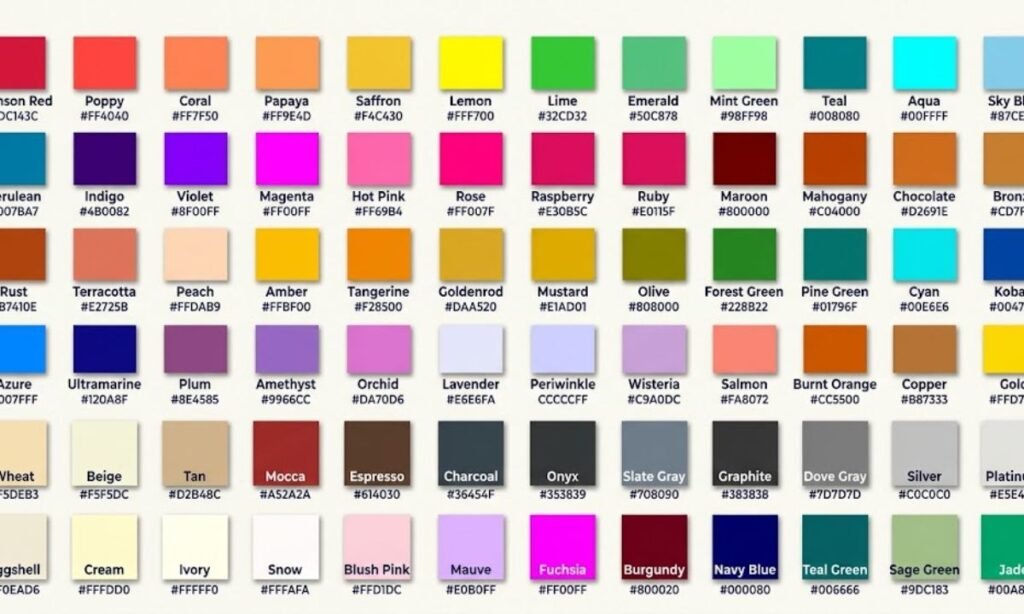
- Tangerine (#F28500): Zesty and cheerful, like peeled citrus on a winter day.
- Burnt Orange (#CC5500): A deep, toasted orange that feels warm in living rooms.
- Pumpkin (#FF7518): The classic autumn orange, loved for festive decorations.
- Apricot (#FBCEB1): A gentle, soft orange that works well for baby rooms.
- Peach (#FFE5B4): Light and sweet, often used in makeup and spring fashion.
- Coral (#FF7F50): A lively mix of orange and pink that reminds people of the sea.
- Persimmon (#EC5800): A strong orange named after the fruit, good for bold logos.
- Carrot (#ED9121): Bright and friendly, commonly used in children’s illustrations.
- Rust (#B7410E): The brownish orange of old iron, popular in rustic design.
- Copper (#B87333): A metallic, glowing orange that suits kitchenware and décor.
- Salmon (#FA8072): A pinkish orange that feels calm and modern on websites.
- Mandarin (#F37A48): A juicy, energetic shade often seen in sports gear.
- Terracotta (#E2725B): The colour of baked clay pots, loved in earthy interiors.
- Marigold (#EAA221): A golden orange that reminds many of wedding flowers.
- Cantaloupe (#FFA677): A soft melon orange, gentle and welcoming on cafe walls.
Yellow Colours Names
- Lemon (#FFF700): Sharp and fresh, perfect for cleaning product labels.
- Canary (#FFEF00): A pure, light-hearted yellow named after the little bird.
- Mustard (#FFDB58): A deeper yellow that feels vintage in clothing and sofas.
- Gold (#FFD700): A symbol of wealth and success, popular in awards and logos.
- Saffron (#F4C430): A warm yellow linked with spice, tradition, and festivals.
- Banana (#FFE135): Cheerful and soft, a favourite for kids’ stationery.
- Sunflower (#FFC512): Bold and happy, it lifts the mood of any poster.
- Amber (#FFBF00): A glowing yellow-orange, like fossil resin in the sunlight.
- Honey (#EBA937): Warm and sticky-sweet, ideal for bakery branding.
- Goldenrod (#DAA520): A slightly muted gold named after a wildflower.
- Champagne (#F7E7CE): A pale, elegant yellow used in wedding themes.
- Citrine (#E4D00A): Named after a crystal, it feels bright and clear.
- Straw (#E4D96F): A soft, dry yellow that looks natural in craft work.
- Flax (#EEDC82): Gentle and earthy, often used in linen fabrics.
- Maize (#F2C649): A golden corn tone that brings harvest vibes to designs.
Green Colours Names
- Emerald (#50C878): A vivid jewel green that feels rich and calm together.
- Forest Green (#228B22): Deep and natural, it makes you think of thick woods.
- Olive (#808000): A muted yellow-green found in army wear and Mediterranean food brands.
- Mint (#3EB489): Cool and refreshing, great for toothpaste and wellness brands.
- Lime (#32CD32): Loud and playful, it brings instant energy.
- Sage (#BCB88A): A soft grey-green, trendy in modern bedrooms.
- Jade (#00A86B): Linked to the precious stone, it carries a peaceful feeling.
- Hunter Green (#355E3B): A dark, classic green used on old-style jackets and cars.
- Moss (#8A9A5B): Gentle and earthy, just like moss on a garden wall.
- Pine (#01796F): A bluish dark green that reminds you of mountain trees.
- Kelly Green (#4CBB17): A bright, clean green often chosen for school logos.
- Pistachio (#93C572): Soft and creamy, popular in dessert themes.
- Seafoam (#9FE2BF): A pale blue-green that feels like ocean foam.
- Fern (#4F7942): A natural, leafy green that suits plant shops.
- Avocado (#568203): A deep, buttery green that was a hit in retro kitchens.
- Shamrock (#009E60): A fresh, lucky green connected with festive days.
- Chartreuse (#7FFF00): An electric yellow-green that stands out in fashion.
- Army Green (#4B5320): A tough, dull green used in uniforms and outdoor gear.
- Malachite (#0BDA51): A bright mineral green, loved in digital art.
- Celadon (#ACE1AF): A pale, grey-tinted green seen in traditional pottery.
Colours Name for Kids
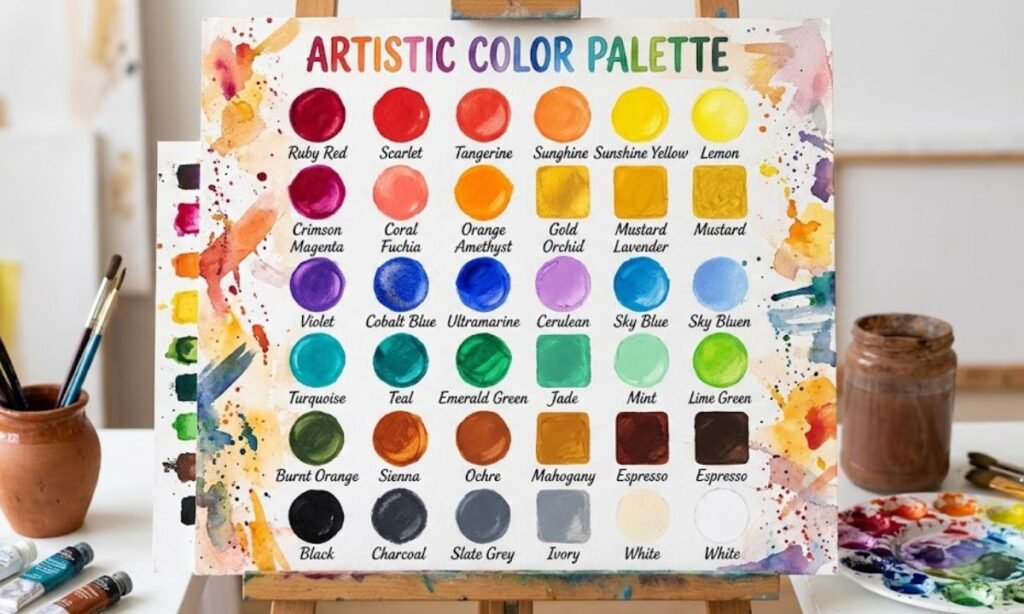
- Red: Think of a juicy apple or a fire truck. Ask your child to find five red things at home.
- Orange: Just like the fruit with the same name. Peeling one together makes learning fun.
- Yellow: The colour of the sun and a ripe banana. It is a happy colour to start with.
- Green: Grass, leaves, and cucumbers. A short walk in the park teaches this one easily.
- Blue: The sky on a clear day and the water in a swimming pool.
- Purple: Grapes and some flowers. Mixing red and blue paint to make it feels like magic.
- Pink: Cotton candy and rose petals. Many little ones love this one right away.
- Brown: Chocolate, tree trunks, and teddy bears. A cosy colour that kids remember quickly.
- Black: The night sky and a cat’s fur. Try a game of spotting black objects in a dark room with a torch.
- White: Milk, clouds, and fresh snow. Pair it with black to show opposites.
- Grey: An elephant’s skin and rain clouds. A good one for explaining mixed colours.
- Gold: A shiny star sticker or a treasure coin. It makes learning feel like a reward.
Blue Colours Names
- Navy (#000080): A deep, trusted blue seen in uniforms and business suits.
- Sky Blue (#87CEEB): Light and airy, it calms people in hospitals and bedrooms.
- Royal Blue (#4169E1): Rich and proud, often used for banners and flags.
- Cobalt (#0047AB): A strong, pure blue loved by painters and ceramic makers.
- Azure (#007FFF): A bright, clear blue like a sunny coast.
- Cerulean (#007BA7): A slightly green blue that looks great in beach photography.
- Sapphire (#0F52BA): Named after the gemstone, it feels precious and deep.
- Turquoise (#40E0D0): A mix of blue and green with a tropical feeling.
- Teal (#008080): Calm and balanced, now very common in modern branding.
- Baby Blue (#89CFF0): Soft and sweet, a traditional choice for newborn items.
- Powder Blue (#B0E0E6): A dusty, light shade that suits vintage weddings.
- Midnight Blue (#191970): Almost black, like the sky just before dawn.
- Denim (#1560BD): The familiar colour of jeans, casual and friendly.
- Cyan (#00FFFF): A bright digital blue used in printing and screens.
- Steel Blue (#4682B4): A cool grey-blue with a firm, industrial look.
- Ultramarine (#120A8F): A deep blue once made from crushed stone, treasured in classic art.
- Prussian Blue (#003153): A dark, inky blue first made by accident in a lab.
- Electric Blue (#7DF9FF): Super bright and glowing, perfect for gaming graphics.
- Cornflower (#6495ED): A soft, cheerful blue taken from a garden flower.
- Aquamarine (#7FFFD4): A watery blue-green that feels clean and fresh.
Purple and Violet Colours Names
- Lavender (#E6E6FA): Pale and soothing, linked with relaxation and sleep products.
- Lilac (#C8A2C8): A sweet spring shade named after the flowering shrub.
- Violet (#8F00FF): A true, vivid purple that stands out in rainbow charts.
- Plum (#8E4585): Deep and fruity, it adds warmth to autumn outfits.
- Amethyst (#9966CC): Inspired by the crystal, it feels spiritual and calm.
- Indigo (#4B0082): A dark blue-purple, historically made from a plant dye.
- Mauve (#E0B0FF): A soft, dusty purple that looks gentle in fashion.
- Orchid (#DA70D6): A bright, flowery purple with a playful side.
- Grape (#6F2DA8): Rich and juicy, a good fit for drinks and snack packaging.
- Eggplant (#614051): A dark, muted purple that works for elegant evening wear.
- Periwinkle (#CCCCFF): A light, bluish purple, friendly and calm.
- Royal Purple (#7851A9): Once reserved for kings, it still feels grand.
- Heliotrope (#DF73FF): A glowing, pinkish violet taken from a fragrant flower.
- Thistle (#D8BFD8): A pale, greyish purple that blends easily with neutrals.
- Byzantium (#702963): A rich red-purple linked with old imperial history.
Colours name in Urdu
- Red, سرخ (Surkh) or لال (Laal): Used for love, brides, and warning signs in daily speech.
- Orange, نارنجی (Narangi): Taken from the word for the fruit.
- Yellow, پیلا (Peela): A common word during spring and wedding celebrations.
- Green, ہرا (Hara) or سبز (Sabz): Hara is casual, while Sabz sounds more formal and poetic.
- Blue, نیلا (Neela): Used for the sea, ink, and sometimes the sky.
- Purple, جامنی (Jaamni): Named after the jamun fruit that many people enjoy in summer.
- Pink, گلابی (Gulabi): Comes from “gulab,” meaning rose.
- Brown, بھورا (Bhoora): Used for soil, hair, and tea shades.
- Black, کالا (Kaala): Everyday word for black, also used in many sayings.
- White, سفید (Safed): Linked with purity and peace.
- Grey, سرمئی (Surmai): Taken from surma, the dark kohl powder.
- Golden, سنہری (Sunehri): Often used in poetry to describe sunsets and memories.
- Silver, چاندی (Chandi) or روپہلی (Ropehli): Chandi is the metal, while Ropehli is the poetic shade.
- Maroon, عنابی (Unnabi): Named after the unnab, or jujube fruit.
- Sky Blue, آسمانی (Aasmani): Literally “of the sky.”
Pink Colours Names
- Blush (#DE5D83): A soft, rosy shade as if cheeks turned slightly red.
- Baby Pink (#F4C2C2): Delicate and sweet, a classic for nursery items.
- Hot Pink (#FF69B4): Loud and confident, great for fashion and party posters.
- Fuchsia (#FF00FF): A bright purple-pink named after a flower.
- Raspberry (#E30B5C): A deep, juicy pink that suits dessert menus.
- Bubblegum (#FFC1CC): Sugary and fun, often seen in toy packaging.
- Salmon Pink (#FF91A4): A warm, peachy pink that flatters many skin tones.
- Carnation (#FFA6C9): A gentle flower-inspired pink used in gift cards.
- Flamingo (#FC8EAC): Bright and tropical, like the long-legged bird.
- Dusty Rose (#C9A9A6): A muted, vintage pink that looks lovely in home décor.
- Cotton Candy (#FFBCD9): Light and dreamy, perfect for fairs and kids’ events.
- Rose Quartz (#F7CAC9): A calm pink inspired by the crystal, trending in minimal design.
- Shocking Pink (#FC0FC0): Extremely bold, once made famous by fashion houses.
- Orchid Pink (#F2BDCD): A mild, graceful tone for wedding invitations.
- Rose Pink (#FF66CC): A bright, romantic shade that works well on greeting cards.
Colours name in Hindi
- Red, लाल (Laal): The colour of weddings, sindoor, and celebration.
- Orange, नारंगी (Naarangi): Taken from the fruit, widely used in school books.
- Yellow, पीला (Peela): Linked with turmeric, spring, and Basant festivals.
- Green, हरा (Hara): Often connected with nature and fresh crops.
- Blue, नीला (Neela): Used for the sky, the ocean, and peacock feathers.
- Purple, बैंगनी (Baingani): Named after the brinjal, or aubergine.
- Pink, गुलाबी (Gulaabi): Comes from “gulab,” the rose flower.
- Brown, भूरा (Bhoora): Used for earth, wood, and animals.
- Black, काला (Kaala): A common word, also seen in many idioms.
- White, सफ़ेद (Safed): Connected with peace, clean clothes, and simplicity.
- Grey, धूसर (Dhusar): A more formal word, while many people simply say “slaiti.”
- Golden, सुनहरा (Sunahara): Describes jewellery, sunrise, and golden memories.
- Silver, चाँदी (Chaandi): Names both the metal and its shine.
- Saffron, केसरिया (Kesariya): The famous deep orange of spices and the national flag.
- Sky Blue, आसमानी (Aasmaani): A light blue that matches a clear sky.
Colours name in Sindhi
Sindhi spellings can change slightly between regions and writers, so it is wise to confirm with a native speaker before using them in print.
- Red, ڳاڙهو (Gaarho): A common word for red in everyday Sindhi.
- Orange, نارنگي (Naarangi): Used for the fruit and its colour.
- Yellow, پيلو (Peelo): Often linked with festivals and turmeric.
- Green, سائو (Saawo): Used for crops, leaves, and hope.
- Blue, نيرو (Nero): The word for the sky and water shades.
- Purple, واڱڻائي (Vaangnaayi): Connected with the brinjal, like in other languages.
- Pink, گلابي (Gulaabi): Taken from the rose, just as in Urdu.
- Brown, ناسي (Naasi): Used for soil and wood tones.
- Black, ڪارو (Kaaro): A basic colour word used in daily talk.
- White, اڇو (Achho): Known for clean clothes and traditional wear.
- Grey, سرمائي (Surmaayi): Inspired by surma, as in Urdu.
- Golden, سونهري (Sonhri): Used in poetry and for shiny items.
- Sky Blue, آسماني (Asmaani): A pale, airy blue.
- Turquoise, فيروزي (Feeroozi): Named after the famous blue-green stone.
- Silver, چانديءَ رنگ (Chandi rang): Literally “silver colour.”
Colours name in Arabic
Arabic colour words change for masculine and feminine nouns. The forms below are masculine, and the feminine forms are in brackets.
- Red, أحمر (Ahmar): Feminine: حمراء (Hamra).
- Orange, برتقالي (Burtuqali): Taken from the word for the orange fruit.
- Yellow, أصفر (Asfar): Feminine: صفراء (Safra).
- Green, أخضر (Akhdar): Feminine: خضراء (Khadra). It carries a deep link to nature and Islamic culture.
- Blue, أزرق (Azraq): Feminine: زرقاء (Zarqa).
- Purple, بنفسجي (Banafsaji): Named after the violet flower.
- Pink, وردي (Wardi): Comes from “ward,” meaning rose.
- Brown, بني (Bunni): Also used for coffee beans in some regions.
- Black, أسود (Aswad): Feminine: سوداء (Sawda).
- White, أبيض (Abyad): Feminine: بيضاء (Bayda).
- Grey, رمادي (Ramadi): Linked with the word for ash.
- Gold, ذهبي (Dhahabi): Used for anything golden or shiny.
- Silver, فضي (Fiddi): Taken from the word for silver.
- Turquoise, فيروزي (Fayruzi): The same gemstone name found in many languages.
- Beige, بيج (Beij): A borrowed word now widely used in fashion and décor.
Brown and Beige Colours Names
- Chocolate (#7B3F00): Rich and comforting, a great fit for bakery brands.
- Coffee (#6F4E37): A deep, roasted tone that suits cafes and wooden furniture.
- Chestnut (#954535): A reddish brown, perfect for hair dye and leather bags.
- Walnut (#773F1A): A dark wood shade often chosen for classic tables.
- Mocha (#967969): A soft brown with a milky touch, popular in wardrobes.
- Caramel (#AF6F09): Warm and golden, it feels sweet and homely.
- Tan (#D2B48C): A light brown that reminds people of sun-kissed skin and sandals.
- Sand (#C2B280): Calm and neutral, a favourite for beach-themed rooms.
- Taupe (#483C32): A grey-brown that goes with almost everything.
- Sienna (#882D17): An earthy reddish brown made from natural clay.
- Umber (#635147): A dark, natural pigment that painters use for shadows.
- Mahogany (#C04000): A reddish wood tone linked with fine furniture.
- Cinnamon (#D2691E): Warm and spicy, ideal for cosy autumn designs.
- Bronze (#CD7F32): A metallic brown used in medals and sculptures.
- Beige (#F5F5DC): A light, quiet colour that creates a relaxed mood.
- Cream (#FFFDD0): Soft and buttery, a gentle alternative to pure white.
- Khaki (#C3B091): A practical sandy shade seen in trousers and travel clothes.
- Camel (#C19A6B): A smooth, classy tone, famous in long winter coats.
- Fawn (#E5AA70): Light and gentle, named after a young deer.
- Desert Sand (#EDC9AF): A pale, warm shade that suits minimal interiors.
Black, White and Grey Colours Names
- Pure Black (#000000): The deepest dark, used for bold text and strong contrast.
- Jet (#0A0A0A): A glossy black named after a polished stone.
- Onyx (#353839): A soft black with a hint of grey, common in luxury items.
- Charcoal (#36454F): A dark grey with a cool tone, popular for suits and websites.
- Ebony (#555D50): Inspired by dark wood, it feels natural and strong.
- Graphite (#383428): The grey of pencil lead, loved by sketch artists.
- Gunmetal (#2A3439): A bluish dark grey with an industrial feel.
- Slate Grey (#708090): A cool stone shade often used in roofing and modern kitchens.
- Ash Grey (#B2BEB5): Light and calm, like cooled ashes.
- Dove Grey (#6D6C6C): A medium, gentle grey that creates a soft background.
- Smoke (#738276): A greenish grey that looks like rising smoke.
- Pewter (#899499): A muted grey-blue, taken from the old metal alloy.
- Silver (#C0C0C0): A shiny light grey that signals technology and elegance.
- Platinum (#E5E4E2): An airy, very light grey that looks premium.
- White Smoke (#F5F5F5): An almost white tone that keeps pages clean without harshness.
- Ghost White (#F8F8FF): White with a faint blue touch, subtle and fresh.
- Snow (#FFFAFA): A bright white with the tiniest hint of pink.
- Ivory (#FFFFF0): A warm white like old piano keys.
- Alabaster (#EDEADE): A soft, stony white used in wall paints.
- Pearl (#F0EAD6): A creamy, glowing white that suits wedding and jewellery themes.
How to Use These 200+ Colour Names in Daily Life
- At home: Show a paint shop worker a name and HEX code like “Sage (#BCB88A)” instead of saying “light green.” You will get a closer match the first time.
- In your wardrobe: Learn names such as taupe, camel, and burgundy. They help you search online stores faster and mix outfits with confidence.
- For school and homework: Students can build a small colour diary with the name, a swatch, and one example from nature. It makes vocabulary stick.
- In social media posts: Use the exact shade name in captions and design briefs. It keeps your brand colours consistent across every post.
- While learning languages: Pick five colours a week from the Urdu, Hindi, Sindhi, or Arabic lists and use them in daily sentences.
- For gifting: Choose wrapping paper and flowers by shade names, like lavender with ivory, to give your gifts a polished look.
- For mood and wellbeing: Soft shades like seafoam and powder blue calm a study corner, while tangerine or lemon can energise a workspace.
Colour Names for Different Professions
Artists
- Artists mix and layer, so shade names help them record recipes. Writing “ultramarine plus a touch of burnt orange” makes a perfect grey easier to repeat.
- Knowing pigment names like umber, sienna, and vermilion also helps when buying paints and discussing techniques with other painters.
Graphic Designers
- Designers rely on HEX codes along with names. Saving “Teal (#008080)” in a style guide keeps logos and posters aligned.
- Strong contrast pairs, such as navy with champagne, make text readable and layouts professional.
Interior Designers
- Interior designers use names to explain a mood to clients. “Sand and sage” tells a calm story faster than a long description.
- Test large paint swatches in morning and evening light, because the same shade can look very different.
Fashion Designers
- Fashion lines are built around seasonal palettes, such as camel, wine, and charcoal for winter.
- Descriptive names like flamingo or dusty rose also help sell a product, because shoppers imagine the feeling before they see the item.
Web Developers
- Developers use HEX, RGB, and sometimes named colours inside code. Clear naming in a project, such as “primary-navy,” saves time for the whole team.
- Always check contrast between text and background so that people with low vision can read comfortably.
Frequently Asked Questions
How many colour names are there in the world?
There is no fixed number. Colour names keep growing through art, fashion, and science. Digital systems alone can display millions of shades, but people usually use a few hundred names in daily life.
What is the difference between a colour name and a HEX code?
A colour name is a human-friendly label, like “crimson.” A HEX code, such as #DC143C, is a short code that tells screens exactly which shade to show. Using both removes confusion.
Which colour names are best for beginners to learn first?
Start with the basic colours: red, blue, green, yellow, orange, purple, pink, brown, black, white, and grey. After that, add shades like navy, mint, coral, and beige one at a time.
Why do colour names look different on different screens?
Every screen has its own brightness, contrast, and colour setting. A shade can look warmer on a phone and cooler on a laptop. For print work, always request a printed sample first.
Are colour names the same in every language?
No. Some languages have many words for one colour, while others have fewer. Many Urdu and Hindi colour names come from fruits and flowers, such as jaamni, baingani, and gulabi.
How can colours affect mood?
Warm shades like red and orange often feel energetic, while blues and greens usually feel calm. The effect can change with culture and personal memories, so treat it as a guide, not a rule.
How do I choose colours that go well together?
Start with one main shade, then pick a neutral like cream or charcoal, and finally add one small accent. A colour wheel can also help you find matching and contrasting pairs.
Conclusion
Colour is more than something we see. It is a language that speaks to our feelings, our culture, and our creativity. In this guide, you explored more than 200 colour names, from deep crimson and soft lavender to everyday words in Urdu, Hindi, Sindhi, and Arabic. Each name gives you a better way to describe the world and share your ideas clearly.